
Reflections from the Road
I’ve been traveling across the country, connecting with people who are ready to make meaningful change in their communities.

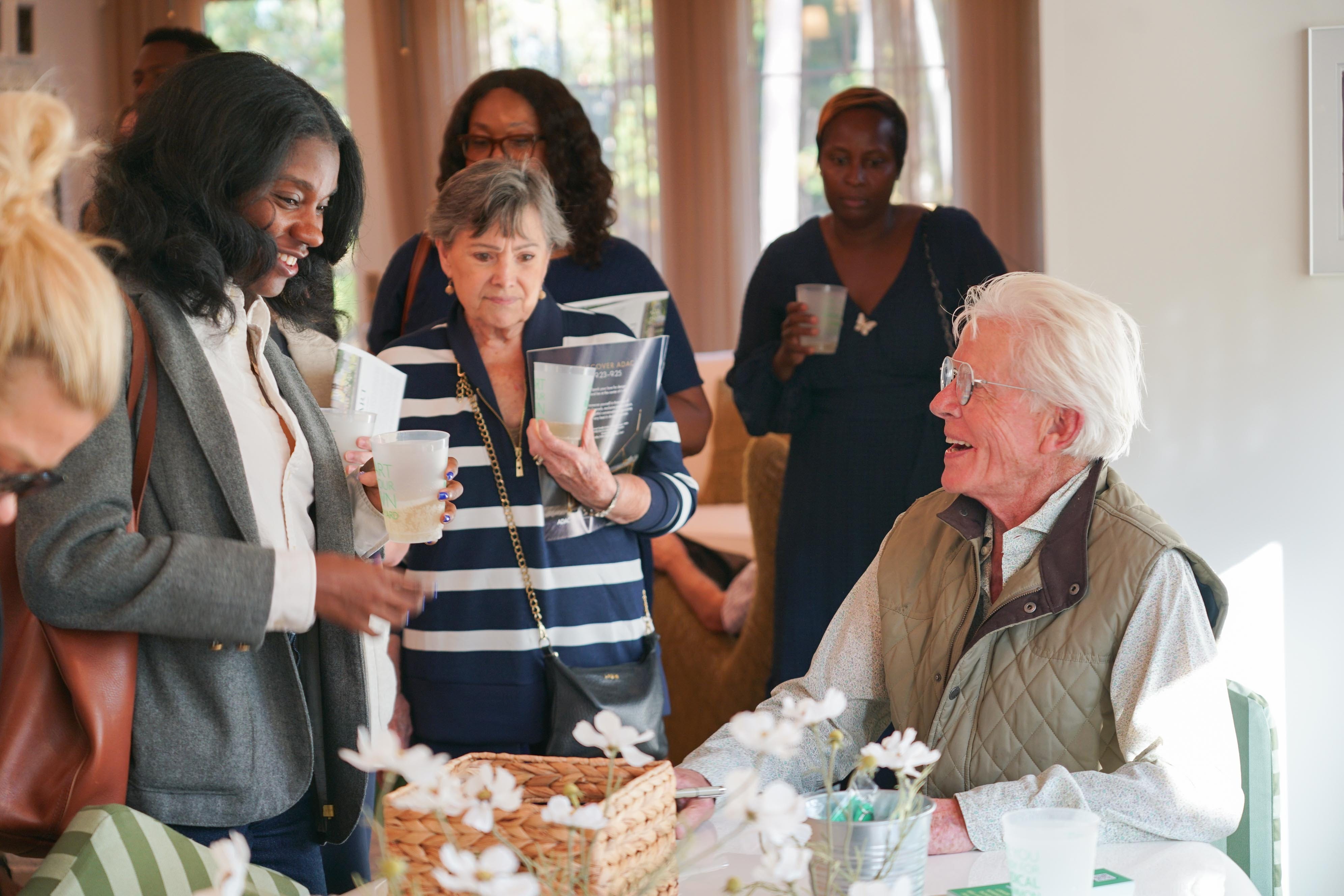
It’s hard to believe that Start In Your Own Backyard has already been out in the world for almost a month. And what a month it’s been! Since the launch on October 7th, I’ve been traveling across the country, sharing ideas, signing books, and connecting with people who are ready to make meaningful change in their communities.
For years, most of my travel has revolved around conferences, panels, and conversations about broad industry trends and future visions. That work is incredibly important but the first leg of this book tour felt entirely different. Each stop has been personal: about the ideas themselves, the people they’ve inspired, and the future we can imagine and build.
We began, fittingly, at home in Serenbe. The launch party at the 2025 Showhouse, followed a few days later by a signing at Hills & Hamlets Bookshop near our busy Saturday farmers market, felt like more than a celebration. It was a moment to pause and really feel the roots of the work I’ve been doing for the past two decades. Starting here, surrounded by friends, family, and familiar faces, felt grounding before setting out on the road.
From there, the journey unfolded into a kind of living conversation about wellness, community, and the built environment. In Washington, D.C., I joined the Semafor World Economy Summit, where one comment from Brooks Tingle, President and CEO of John Hancock, has stayed with me: 95% of healthcare spending goes toward treating illness, not preventing it. His company is now rewarding customers for simple, daily actions that support long-term health. This is a small but powerful example of what I often call radical common sense. It’s the same philosophy that underpins Start In Your Own Backyard: systems that work for everyone and nurture health and happiness.
While in D.C., I also sat down with Jessica Wahl Turner of the Outdoor Recreation Roundtable for a conversation on how outdoor living and green design can reconnect us to nature, and to each other. It’s a theme that runs through nearly everything I’ve worked on, and hearing how others are advancing that mission was energizing.


Back in Atlanta, I joined WABE’s Jennifer Dorian for a thoughtful discussion on community, sustainability, and the power of place.
Next up was Seattle, where I joined Grant McCargo, co-founder of Urban Villages. Grant and his team are doing remarkable work creating real estate developments that truly serve people and place. None of their projects look the same because no two communities are the same. They share Serenbe’s belief that good design should enhance well-being, not detract from it. While there, a former Serenbe resident came out to support us, a small but meaningful reminder of how deeply connected this work really is.
A quick note: I can’t say enough about our venues and accommodations at Urban Villages’ two remarkable properties: Railspur in Seattle and the Populus Hotel in Denver. Railspur, a LEED Platinum–certified, site-specific development, embodies preservation and sustainability at every level. Its name is a nod to the historic rail lines that once ran through the district. In Denver, Populus is a true masterpiece of biophilic design. Inspired by the native Aspen tree, its distinctive exterior turns heads, but what’s even more impressive is that it’s the first carbon-positive hotel in the country, proving that exceptional design and environmental responsibility can go hand in hand with great business.


In San Francisco, I reconnected with dear friends Barbara and Howard Wollner. Howard kindly led a discussion of the book at the Commonwealth Club, an honor I won’t soon forget. The room was filled with thoughtful people eager to explore how we can design healthier, more connected communities that nurture both people and the planet.


The following day brought me to Irving, Texas, for the Future Place Conference, where I accepted Zonda’s 2025 Masterplan of the Year award for Serenbe. This recognition was especially meaningful because it honors the very principles that have guided us from the beginning: thoughtful planning, human-centered design, and the belief that nature and community should shape how we live. We brought 110 books to the signing, thinking it would be plenty, only to sell out completely. A wonderful problem to have, and another sign that people are eager to build a better way of living.
Denver was the next stop. Another event with Grant McCargo, this time with my daughter, Kara, and my grandson, Amos, by my side. After two full weeks of airports and late nights, traveling with family was a beautiful reminder of why this work matters in the first place. The book is dedicated to my grandchildren and to future generations, after all. We ended this first leg of the tour in my hometown of Longmont, Colorado, a full-circle moment that felt both nostalgic and deeply personal.


Now, as November begins, the momentum continues. I’m writing this from Charlotte, North Carolina, where I’m preparing to speak with students at Queens University about biophilic design and the future of place-based wellness. Next comes Dallas for the Build & Brain Conference, then London for the Biophilic Design Conference, where I’ll be sharing thoughts on why policy must prioritize both place and planet. Finally, I’ll head to Dubai for the Global Wellness Summit.
And December isn’t slowing down, either: I’ll be back on the road in New York, Los Angeles, and Atlanta for more conversations, signings, and community gatherings. You can find the details on my website.
When you create something, you rarely know the full impact it will have. Most of the time, you put your head down, focus on the next project, and keep moving forward. But over these past few weeks, I’ve had the rare privilege of seeing Start In Your Own Backyard come to life in ways I couldn’t have imagined, hearing from people who aren’t just reading the book, but using it as a blueprint to reimagine their own neighborhoods and lives.
It’s a humbling and deeply gratifying reminder that the ideas we plant often take root in places we’ll never see. And sometimes, if you’re lucky enough, the world gives you a glimpse of how far those roots have grown.
